
Mars
Did You Know?
Mars has the largest volcano in the Solar System: Olympus Mons, which is 3 times taller than Mount Everest!
The Red Planet
Mars, the fourth planet from the Sun, is often called the Red Planet due to iron oxide (rust) on its surface. It's about half the size of Earth and has a thin atmosphere composed mostly of carbon dioxide. Mars has polar ice caps, seasons, volcanoes, canyons, and evidence of ancient water flows, making it one of the most Earth-like planets in our Solar System. It's the primary target for future human exploration.
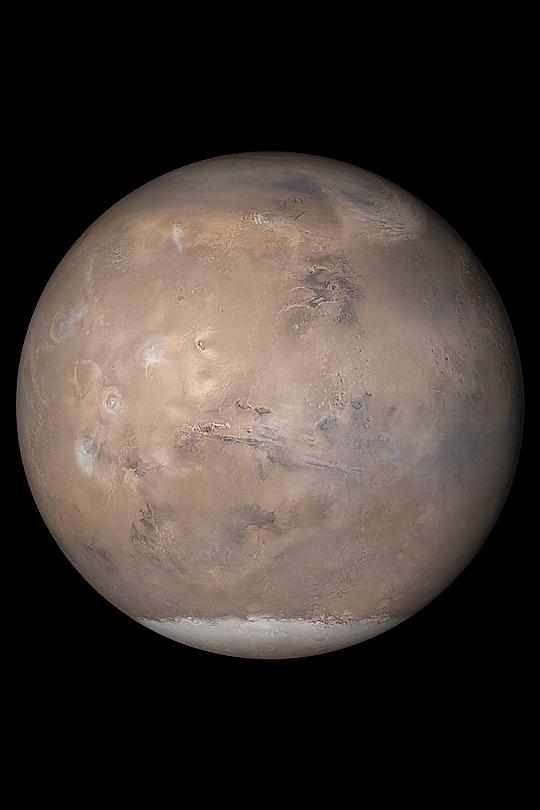
Surface Features
Mars has dramatic surface features:
- Olympus Mons: The largest volcano in the Solar System, three times taller than Mount Everest at 22 km (13.6 miles) high
- Valles Marineris: A canyon system 4,000 kilometers long and up to 7 kilometers deep - the largest canyon in the Solar System
- Polar Ice Caps: Made of water ice and frozen carbon dioxide, changing size with the seasons
- Ancient Riverbeds: Evidence that liquid water once flowed on Mars billions of years ago
Search for Life
Mars is a prime target in the search for past or present life. Rovers like Curiosity and Perseverance are analyzing the planet's geology and searching for biosignatures. Evidence suggests Mars once had a thicker atmosphere and liquid water on its surface, conditions that could have supported life. Future missions will collect samples to return to Earth for detailed analysis. The discovery of methane in Mars' atmosphere is particularly intriguing, as it could be produced by biological processes.
Human Exploration
Mars is the ultimate goal for human space exploration. NASA, SpaceX, and other organizations are developing technologies for crewed missions to Mars. Challenges include the 7-month journey, radiation exposure, landing on Mars, and surviving in its harsh environment. Plans include establishing a permanent settlement and making humanity a multi-planetary species. The first humans could land on Mars as early as the 2030s.
Amazing Facts
Mars has two small moons: Phobos and Deimos
This fact reveals the incredible scale and wonder of our universe.
Click to flip back
A year on Mars is 687 Earth days
This fact reveals the incredible scale and wonder of our universe.
Click to flip back
Mars' atmosphere is 100 times thinner than Earth's
This fact reveals the incredible scale and wonder of our universe.
Click to flip back
The Perseverance rover is searching for signs of ancient life
This fact reveals the incredible scale and wonder of our universe.
Click to flip back
Test Your Knowledge
Mars Quiz
What is the largest volcano on Mars?
Your Next Jump
Continue your journey through the cosmos
Planets
Explore planets and discover more cosmic wonders
Solar System
Explore solar system and discover more cosmic wonders
Missions
Explore missions and discover more cosmic wonders
Future Missions
Explore future missions and discover more cosmic wonders