Stars
Did You Know?
The nearest star to Earth (besides the Sun) is Proxima Centauri, 4.24 light-years away.
What Are Stars?
The cosmic furnaces that light up the universe
Stars are massive, luminous spheres of plasma held together by gravity. They are the fundamental building blocks of galaxies and the source of light and energy in the universe. Our Sun is a star, and there are billions of other stars in our galaxy alone, each with its own unique characteristics and life cycle. Stars form from collapsing clouds of gas and dust, and their life cycles depend on their mass.
Star Formation
Where cosmic dust becomes stellar fire
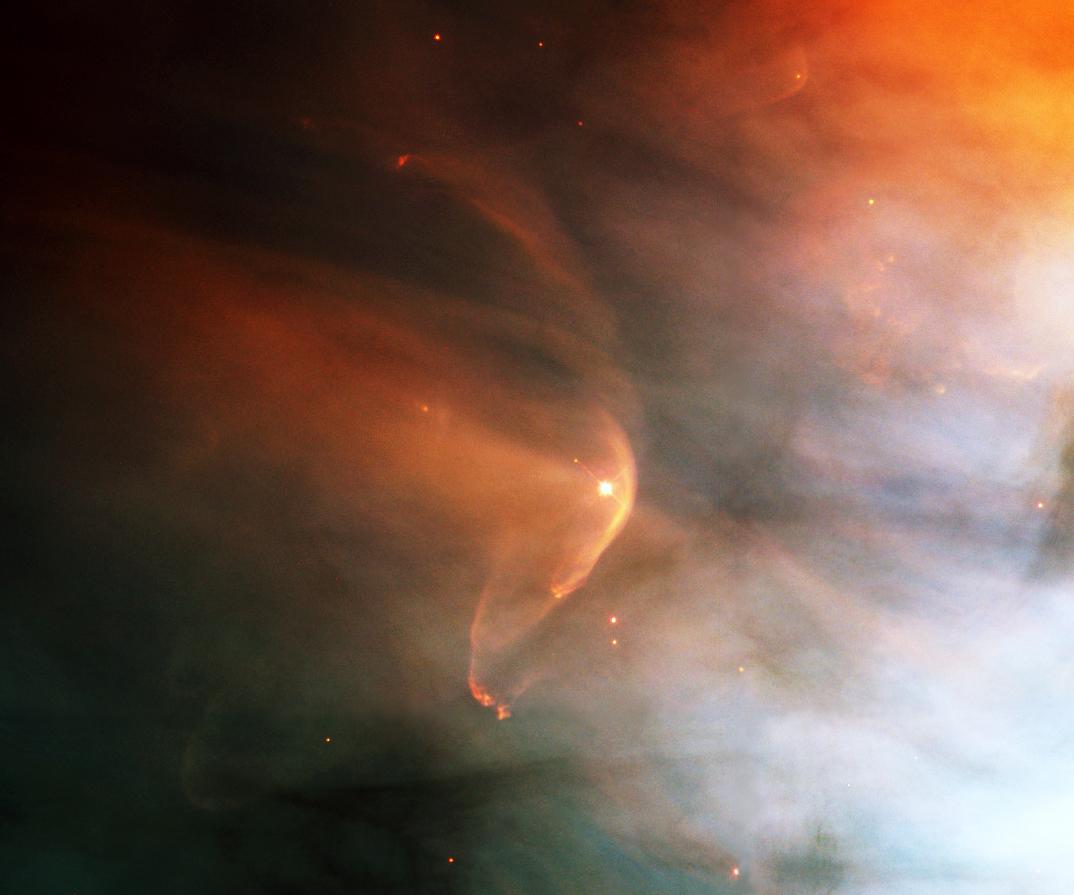
Stars form from collapsing clouds of gas and dust called nebulae. When a region of a nebula becomes dense enough, gravity causes it to collapse. As the cloud collapses, it heats up and forms a protostar. When the core temperature reaches about 10 million degrees Celsius, nuclear fusion begins, and a star is born. This process can take millions of years. The mass of the collapsing cloud determines the star's size and type.

Star Classification
The cosmic spectrum from blue giants to red dwarfs
Stars are classified by their temperature and brightness using the Morgan-Keenan system. The main sequence stars are categorized as:
- O-type: Hottest, bluest stars (30,000-50,000 K) - rare and short-lived
- B-type: Hot, blue-white stars (10,000-30,000 K)
- A-type: White stars (7,500-10,000 K)
- F-type: Yellow-white stars (6,000-7,500 K)
- G-type: Yellow stars like our Sun (5,200-6,000 K)
- K-type: Orange stars (3,700-5,200 K)
- M-type: Coolest, reddest stars (2,400-3,700 K) - most common type
Star Life Cycle
From birth to death, the cosmic journey of stellar evolution
A star's life cycle depends on its mass. Low-mass stars like red dwarfs can burn for trillions of years. Medium-mass stars like our Sun live for billions of years, eventually becoming red giants and then white dwarfs. High-mass stars live fast and die young, ending their lives in spectacular supernova explosions that can form neutron stars or black holes. The death of massive stars enriches the universe with heavy elements.
Gallery




Amazing Facts
Our Sun is a medium-sized G-type star
This fact reveals the incredible scale and wonder of our universe.
Click to flip back
Red dwarfs can live for trillions of years
This fact reveals the incredible scale and wonder of our universe.
Click to flip back
Supernovae can outshine entire galaxies
This fact reveals the incredible scale and wonder of our universe.
Click to flip back
White dwarfs are Earth-sized but as massive as the Sun
This fact reveals the incredible scale and wonder of our universe.
Click to flip back
Test Your Knowledge
Stars Quiz
What type of star is our Sun?
Your Next Jump
Continue your journey through the cosmos
Galaxies
Explore galaxies and discover more cosmic wonders
Nebulae
Explore nebulae and discover more cosmic wonders
Black Holes
Explore black holes and discover more cosmic wonders
Solar System
Explore solar system and discover more cosmic wonders